
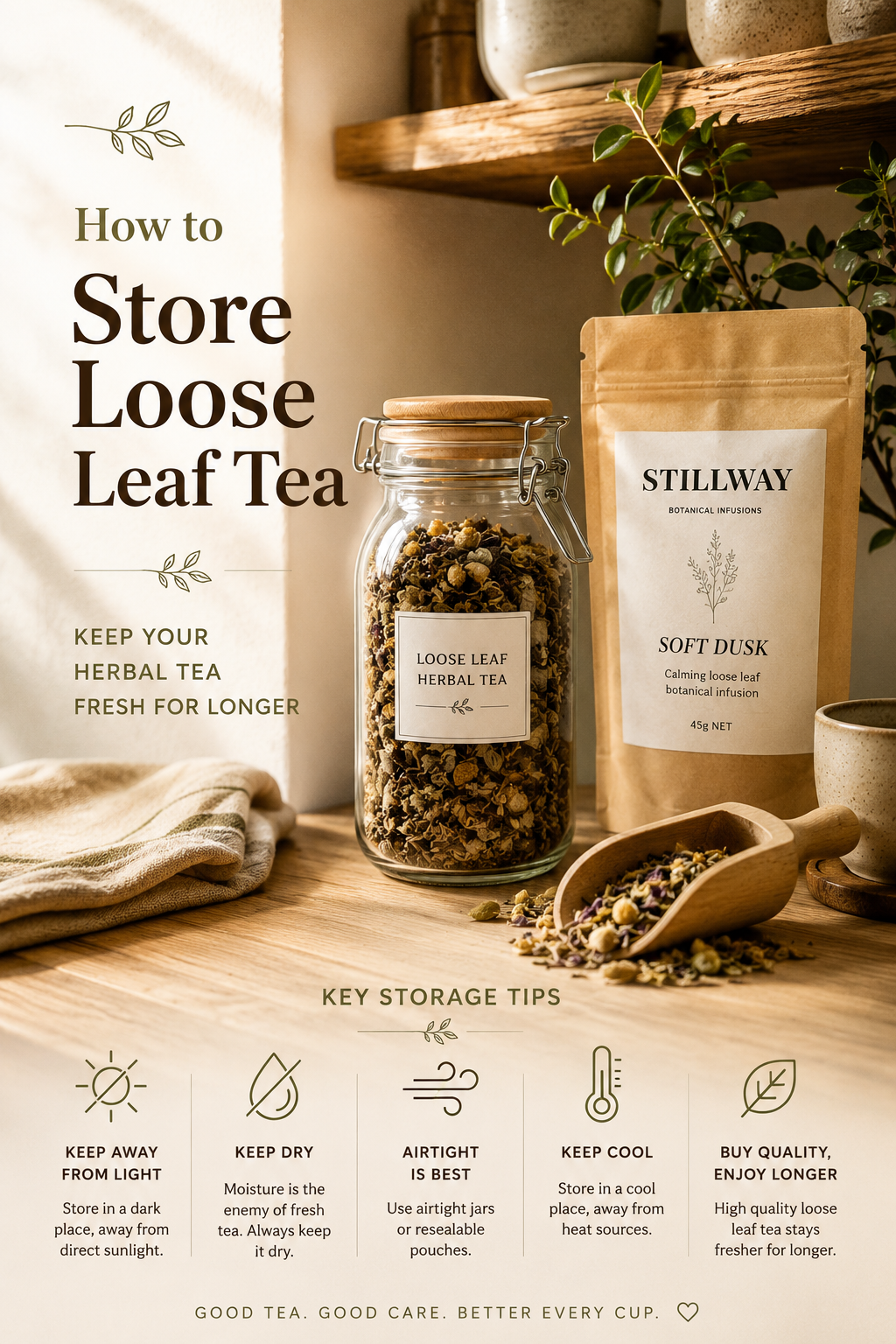

Loose leaf herbal tea deserves a little extra care after you bring it home. Proper storage helps preserve its aroma, flavour and freshness, ensuring every cup tastes just as it should. Whether you’re new to loose leaf tea or have enjoyed it for years, these five simple storage tips will help keep your botanical infusions at their best.
Storing loose leaf tea correctly is one of the easiest ways to proctect its delicate aroma and flavour. Unlike tea bags, loose leaf herbal tea contains larger pieces of herbs and flowers that can loose their freshness if exposed to air, light or moisture. With a few simple habits, your tea can stay enjoyable for months.
1. Store Tea in an AirTight Container
Air is one of the biggest enemies of loose leaf tea. Always keep your tea in a sealed pouch or airtight glass container to protect it from oxygen and moisture.
Why it matters: Every time tea is exposed to air, it slowly begins to lose its natural aroma. Resealing the pouch immeadiately after use or transferring your tea to an airtight container helps preserve the flavours of chamomile, lemon balm, lavender and other delicate botanicals.
2. Keep it Away from Light
Direct sunlight can gradually reduce the flavour and aroma of herbs. Store your tea in a cupboard or pantry where it is protected from light.
3. Avoid Heat and Humidity
Keep your tea away from owens, kettles, dishwashers and sunny windows. A cool, dry cupboard is the ideal place for storing herbal tea. Avoid storing tea in the refrigerator. Although it may seem like good idea, refrigerators create moisture every time the door is opened. Loose leaf tea can also absorb food odours, reducing its freshness and flavour. A cool, dry cupboard is a much better choice.
4. Keep Strong Smells Away
Loose leaf tea can absorb nearby aromas. Avoid storing it next to coffee, spices or strongly scented foods.
5. Buy an Amount You’ll Actually Use
Even when stored carefully, loose leaf tea gradually loses some of its aroma and flavour over time. Rather than buying more tea than you are likely to use, consider buying smaller quantities that can be enjoyed while the botanicals are still fresh and aromatic. How quickly quality changes depends on the ingredients, packaging and storage conditions.
How Can You Tell When Loose Leaf Tea is Losing Freshness?
Loose leaf tea doesn’t usually lose its quality overnight. The changes tend to happen gradually, which can make them difficult to notice. One of the first things to check is the aroma. Open the container and smell the dry leaves or botanicals before brewing. If the aroma is noticeably weaker than you remember, the tea may have begun to lose some of its freshness.
The brewed cup can tell you even more. Use the same amount of tea, water temperature and steeping time you normally use, then pay attention to the aroma and intensity of flavour. With botanical blends, individual ingredients may also change at different rates, so the balance of the blend can gradually taste different over time.
A Simple Freshness Test You Can Do at Home
If you have an older tea and a freshly opened sample of the same tea, brewing them side by side can make changes in freshness easier to notice. Use the same amount of tea in each cup, the same volume and temperature of water, and the same steeping time.
Compare the dry aroma first, then the brewed aroma, colour, flavour intensity and aftertaste. Keeping the brewing conditions identical makes the comparison more meaningful and can help distinguish changes in the tea from differences in preparation.
What I’ve Noticed With Botanical Tea Over Time
When working with loose botanical ingredients, I’ve noticed that freshness isn’t always lost evenly across a blend. Some botanicals can retain a noticeable aroma while others become much more subdued. As this happens, a blend that originally tasted balanced can begin to taste different even though the ingredients and proportions haven’t changed.
One of the clearest signs I’ve noticed is a reduction in aroma before brewing. The finished infusion can taste flatter, with some ingredients becoming more noticeable simply because the more aromatic botanicals have faded. This has made me pay much more attention to ingredient freshness, storage conditions and how long botanicals are kept after opening.
Does Stale Tea Mean Unsafe Tea?
A loss of freshness does not necessarily mean that loose leaf tea is unsafe to drink. Tea that has simply lost some of its aroma or flavour is different from tea that has been exposed to moisture or shows signs of spoilage.
If you notice visible mould, unusual moisture, clumping that suggests the tea has become damp, or abnormal odour, it is safer to discard it. Good storage is therefore not only about preserving flavour – keeping dried botanicals protected from moisture is particularly important.
The Bottom Line
Storing loose leaf tea well comes down to protecting it from air, light, heat, moisture, and strong odours. Keep it sealed in a cool, dry and dark place, buy quantities you can reasonably use while they are fresh, and pay attention to changes in aroma and flavour over time.
With botanical blends especially, freshness can influence not only the strength of the flavour but also the balance between individual ingredients. A few simple storage habits can help every cup taste much closer to the way the blend was originally intended.